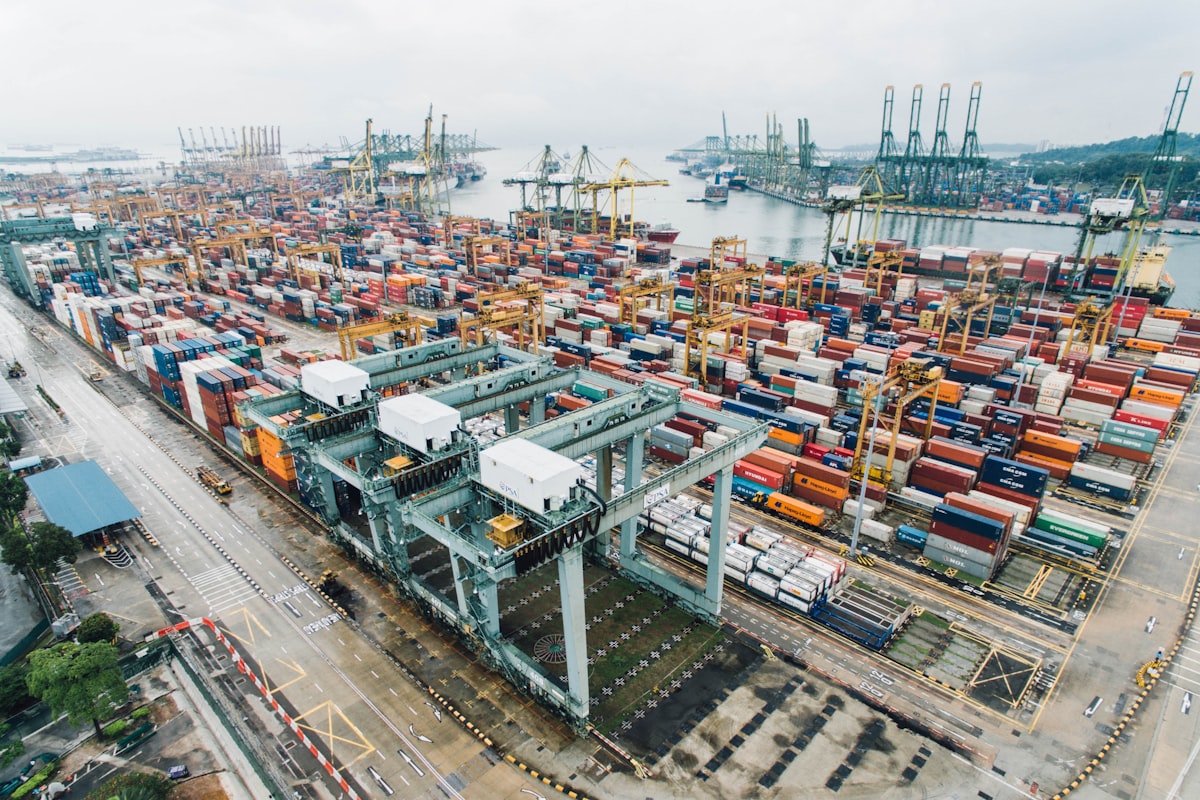
International freight can seem complex — but once you understand the key steps, the documentation, and the roles of the people involved, it becomes a manageable and repeatable process. This guide walks you through every stage of a typical international shipment, from the moment you place your purchase order in China to the moment your cargo is delivered to your warehouse. Whether you are a first-time importer or an experienced buyer looking to optimise your logistics, this guide will give you a solid foundation.

Before any freight can be booked, your supplier must provide a pro-forma invoice with: full description of goods, HS codes, unit prices, total value, country of origin, and Incoterms. Without this, your freight forwarder cannot accurately quote or file the necessary import declarations.
Incoterms define who is responsible for freight, insurance, and risk at each point in the journey. EXW means you collect from the factory. FOB means the supplier delivers to the port. CIF includes ocean freight and insurance. DDP means the supplier delivers to your door, duties paid. Most importers from China use FOB.
Provide your freight forwarder with: origin city or port, destination port, cargo dimensions and weight (CBM and kg), HS code, commodity description, and required transit time. The quote you receive should include ocean freight, origin charges, destination port charges, and customs clearance fees.
You fill an entire container — either 20ft or 40ft. FCL is cost-effective for shipments over 15 CBM. Your cargo travels sealed from origin to destination — less handling, less risk of damage.
Multiple shippers' cargo is consolidated in one container. You pay per CBM. Cost-effective for shipments under 12 CBM. Slightly longer transit time due to consolidation and deconsolidation.
Refrigerated containers for temperature-sensitive cargo — food, pharmaceuticals, chemicals. Available in FCL and LCL. Temperature can be set from -25°C to +25°C.
For cargo that doesn't fit standard containers — open-top for tall items, flat-rack for wide/heavy items, and breakbulk for items too large for any container.
The most important shipping document. Issued by the carrier, it acts as a receipt for the cargo, evidence of the contract of carriage, and a document of title (for original B/Ls). Never release payment for goods until you hold the original B/L or a telex release has been issued.
Certifies where the goods were manufactured. Required for most international shipments and essential for claiming preferential tariff rates under free trade agreements. Issued by the China Council for the Promotion of International Trade (CCPIT) for China-origin goods.
The buyer–seller invoice that forms the basis of customs valuation. Must include: seller and buyer details, goods description, HS codes, quantity, unit value, total value, currency, country of origin, and Incoterms.
For US-bound ocean freight, an Importer Security Filing (ISF) must be submitted to US CBP at least 24 hours before cargo is loaded onto a vessel at the foreign port. Your customs broker files this on your behalf. Failure to file on time results in $5,000 fines.
Once cargo arrives at the US port, your broker files a formal entry with CBP, submitting your commercial invoice, packing list, B/L, and COO. CBP may release the cargo immediately or hold it for examination. After duty payment, cargo is released.
Some China-origin products are subject to additional antidumping or Section 301 tariffs on top of standard duty rates. Your freight forwarder and customs broker should advise you of these additional costs before you commit to purchasing from China.
Our freight specialists are ready to turn your questions into a concrete shipping plan. Contact Marwest LLC for a free consultation tailored to your cargo and destination.
© 2025 Marwest LLC. All rights reserved.